Boom Bumpers - Saving the Gybe Back
Team racing places boats in situations where contact is sometimes difficult to avoid. This becomes particularly apparent at Marks 3 and 4 on a standard S course.
As the inside boat gybes at Mark 3, or gybes back at Mark 4, the outside boat is often gybing at the same time while rolling the boat flat to accelerate away. In the wrong circumstances, this can drive the end of the inside boat's boom directly into the topsides of the outside boat.
At one end of the scale, there may be little more than a scratch. At the other, the boom can puncture the hull, creating enough damage to take a boat out of the event entirely. Most incidents fall somewhere in between, but even relatively minor repairs consume time and money.
A boom end bumper cannot prevent every possible outcome, but it can significantly reduce the severity of the contact when it does occur.
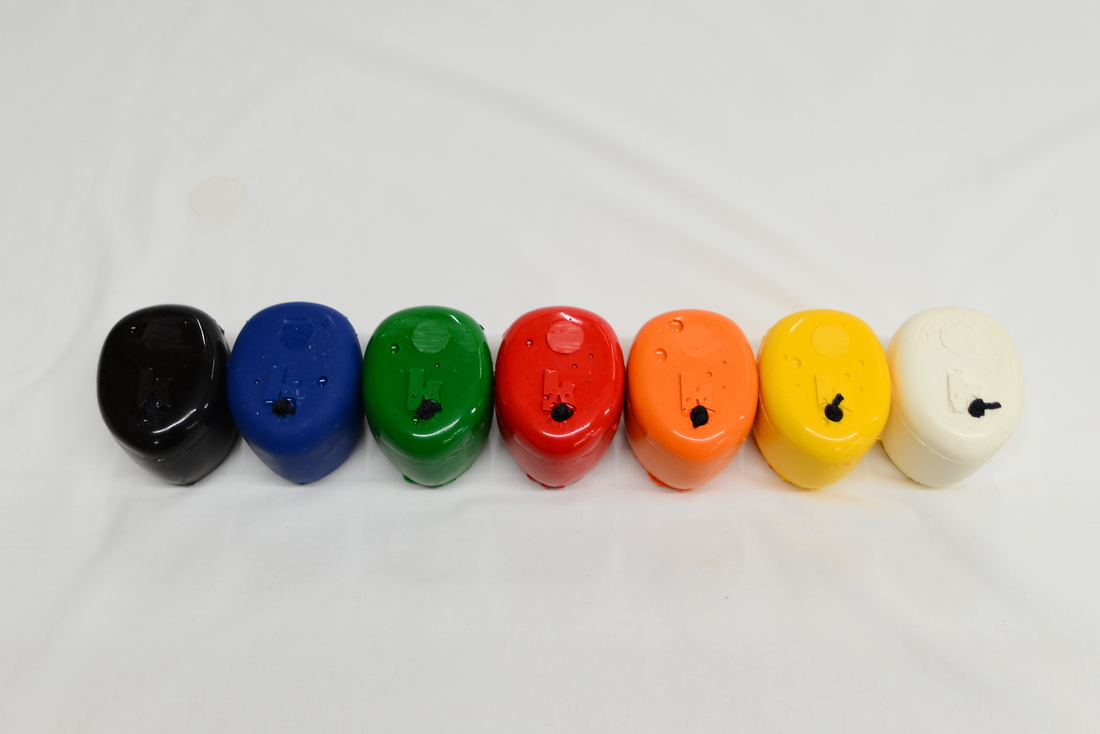
The kSail Boom End Bumper
Our boom end bumpers are moulded from UV-stabilised polyurethane rubber, chosen because it stands up well to regular use while still providing some impact absorption. The aim is to spread the load from a contact over a larger area and reduce the concentration of force that would otherwise be applied through the metal boom fitting.
Like any protective equipment, they are not guaranteed to prevent damage in every situation. Team racing can generate substantial loads, particularly when boats are moving quickly in close proximity. What the bumper does do is reduce the impact of many of the contacts that would otherwise result in more significant damage.
The bumper is designed to fit the end of the standard Firefly boom using the Selden 2520 section.
Installation
Installation is straightforward, but it is important that the bumper is fitted correctly. A poorly fitted bumper can work loose and fall off.
Unfortunately, they also sink.
You Will Need
- Approximately 150mm of 3mm rope (supplied with the Bumper)
- A means of cutting and sealing the rope ends
Fitting the Bumper
- Tie the rope securely to the aft boom eye used for the mainsheet block.
- Feed the free end of the rope through the hole in the bumper from the inside towards the outside.
- Push the bumper fully onto the end of the boom while taking up any slack in the rope.
- Pull the rope tight and tie a figure of eight knot in the end.
- Roll the knot into the larger recess at the back of the bumper.
- Trim and seal any excess rope.
Things to Be Aware Of
The security of the bumper relies entirely on the attachment rope and knot.
If the rope is not pulled tight enough, or the knot is poorly formed, the bumper may gradually work loose in use.
A loosely fitted bumper will often start to creep backwards along the boom. If left unchecked it may eventually pull completely clear of the boom fitting.
In the best case, it remains hanging from the safety rope. In the worst case, the attachment fails completely and the bumper ends up at the bottom of the lake. As mentioned earlier, it will sink.
For this reason it is worth giving the bumper a quick check before each event to confirm that it remains securely seated on the end of the boom.
Final Thoughts
Boom end bumpers exist because team racing places boats in situations where contact is unavoidable. They are not intended to encourage contact, nor are they a substitute for good boat handling. Their purpose is simply to reduce the damage caused when things do not quite go to plan.
For a relatively simple piece of equipment, they can prevent a surprising amount of repair work over the course of a season. Any fleet that spends a lot of time team racing will see contact around Marks 3 and 4, and when that happens a boom end bumper is usually much cheaper than repairing a hole in a hull.
Available from the kSail Store